The Comprehensive Guide to Futsal Mastery and the Legend of Carlos Kaiser
The world of football is a vast tapestry woven from rigorous discipline, technical brilliance, and, occasionally, the utterly absurd. On one end of the spectrum lies Futsal, a high-octane, small-sided version of the game that has served as the ultimate laboratory for developing the world’s greatest talents. On the other end lies the surreal history of Carlos Kaiser, a man who navigated the professional football world for twenty years without possessing any discernible athletic ability. This pillar page serves as a comprehensive exploration of both the technical mastery required by Futsal and the performative deception that allowed Kaiser to become a legend of a different sort.
Understanding Futsal: The Foundation of Modern Technical Mastery
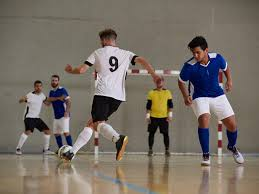
Futsal is not merely “indoor soccer.” It is a distinct, FIFA-recognized sport played on a hard court surface, usually delimited by lines rather than walls. The name itself is a portmanteau of the Spanish “fútbol sala” or Portuguese “futebol de salão,” which translates literally to “hall football.” Its origins trace back to 1930 in Montevideo, Uruguay, where Juan Carlos Ceriani created a five-a-side version of the game intended for youth competition in YMCAs. Since its inception, it has evolved into a global phenomenon that emphasizes ball control, quick thinking, and spatial awareness.
The Historical Context and Global Influence
While Ceriani established the initial framework, the game truly flourished in Brazil. The dense urban environments of South American cities necessitated a game that could be played in confined spaces. This environment forced players to develop a level of technical proficiency that the traditional 11-a-side game rarely demands. Legends such as Pelé, Ronaldinho, and Lionel Messi have all credited Futsal as the primary catalyst for their extraordinary close-control skills and ability to operate under intense pressure.
Core Rules and Court Specifications
To understand Futsal, one must first grasp the physical constraints and regulatory framework that define the pace of the game. Unlike traditional football, Futsal utilizes a Size 4 ball that is weighted to ensure a lower bounce, keeping the game grounded and technical. The standard dimensions for an international Futsal court are 38 to 42 meters in length and 20 to 25 meters in width.
- Team Composition: Each team consists of five players, including one goalkeeper. Substitutions are “rolling,” meaning they can occur at any time without stopping the clock.
- Match Duration: A standard match consists of two 20-minute halves. Crucially, the clock stops every time the ball goes out of play, ensuring 40 minutes of actual playing time.
- The Four-Second Rule: To maintain a high tempo, players have only four seconds to restart play from kick-ins, corner kicks, and goal clearances. Failure to do so results in a turnover of possession.
- Accumulated Fouls: Once a team commits five fouls in a half, every subsequent foul results in a direct free kick from the second penalty mark (10 meters out), regardless of where the foul occurred.

Essential Futsal Techniques and Tactical Advantages
The technical demands of Futsal are significantly higher than those of outdoor football. Because the court is smaller and the players fewer, every individual is constantly involved in the play. This high frequency of touches—estimated to be 600% more touches per player than in the 11-a-side game—accelerates the learning curve for ball mastery.
The “Sole of the Foot” Control
One of the most distinctive elements of Futsal is the use of the sole of the foot for ball control. On a hard surface, using the instep can often lead to the ball escaping the player’s reach. By using the sole, players can “trap” the ball instantly and roll it in any direction, allowing for 360-degree mobility. This technique is essential for maintaining possession in tight spaces and for executing the quick directional changes required to beat a defender.
Tactical Formations and Player Roles
Futsal tactics are fluid, but they generally revolve around specific roles that differ from traditional positions:
| Role | Primary Responsibility | Key Attributes |
|---|---|---|
| Fixo (Defender) | The anchor of the team, organizing the defense and starting attacks. | Strength, vision, and precise passing. |
| Ala (Winger) | The creative engine, operating on the flanks to stretch the defense. | Speed, 1v1 dribbling, and stamina. |
| Pivot (Forward) | The focal point of the attack, often playing with their back to the goal. | Ball retention, shielding, and clinical finishing. |
| Goleiro (Goalkeeper) | The last line of defense and a vital part of the buildup play. | Reflexes and “sweeper-keeper” distribution skills. |

The Absurd Performance Art of Carlos Kaiser
While Futsal represents the pinnacle of technical development, the story of Carlos Henrique Raposo, better known as Carlos Kaiser, represents the pinnacle of footballing deception. For two decades, Kaiser managed to sign contracts with some of the biggest clubs in Brazil and abroad—including Flamengo, Fluminense, and Botafogo—without ever playing a competitive match. His career was not a pursuit of sporting excellence, but rather a masterpiece of social engineering and performance art.
The Mechanics of the Con
Kaiser’s strategy was as brilliant as it was simple. He befriended the most influential footballers of the era, such as Romário, Bebeto, and Renato Gaúcho. By positioning himself as a loyal friend and a “fixer” who could handle social arrangements, he ensured that these stars would recommend him to their clubs. Once signed, Kaiser would utilize a variety of tactics to avoid the pitch:
- The Fake Injury: At the start of training sessions, Kaiser would often feign a hamstring or muscle pull. In an era before MRI scans were commonplace, doctors had to take the player’s word for it.
- The Toy Phone: Kaiser was frequently seen walking around training grounds talking into a mobile phone in English or French, pretending to negotiate offers from European clubs to increase his perceived value. It was later discovered that the “phone” was a toy.
- The Social Shield: He would pay youth team players to tackle him hard in training so he could justify an injury layoff.
The Bangu Incident: The Ultimate Diversion
The closest Kaiser ever came to playing was during his time at Bangu. The club’s owner, Castor de Andrade, grew tired of Kaiser’s constant “injuries” and ordered the coach to put him on the field while the team was losing. While warming up, Kaiser realized he couldn’t hide his lack of skill any longer. Seeing a fan shouting insults at the team, he jumped into the stands to start a fight. He was promptly sent off before he could even enter the pitch. In the locker room, he told the owner he was “defending his honor” against a fan who called de Andrade a thief. Moved by his “loyalty,” the owner gave him a contract extension instead of a fine.

Legacy and Cultural Impact of Football Narratives
The juxtaposition of Futsal’s technical rigor and Kaiser’s fraudulent career highlights a fundamental truth about football: it is as much about the stories we tell as it is about the goals we score. Futsal provides the scientific foundation for greatness, while Kaiser provides the mythology of the underdog (or in this case, the anti-hero).
Technical Excellence vs. Professional Illusion
In the modern era of data analytics, GPS tracking, and high-definition scouting, a character like Carlos Kaiser could never exist. Every sprint, pass, and touch is now recorded and analyzed. This makes the technical foundation provided by Futsal more critical than ever. Today’s scouts look for the “Futsal brain”—the ability to process information rapidly and execute movements in milliseconds. While Kaiser’s career was a fascinating anomaly, the future of the sport belongs to those who embrace the grueling, high-repetition environment of the small-sided game.
The “Greatest Footballer to Never Play”
Kaiser eventually admitted to his deceptions, famously stating, “I didn’t play, I didn’t score, I didn’t do anything. I just wanted to have fun.” His story serves as a reminder of a bygone era of football—a time when charisma and connections could occasionally outweigh talent. However, for those looking to actually succeed on the pitch, the path remains clear: master the ball, master the court, and master the principles of Futsal.
Frequently Asked Questions (FAQ)
- Q1: Why is Futsal considered better for player development than traditional soccer?
- Futsal places players in a high-pressure environment where they receive the ball far more frequently. The smaller court and lack of walls force players to use their technique and spatial awareness to escape pressure, rather than relying on physical strength or long balls. This develops a “faster” football brain.
- Q2: What are the main differences between Futsal and “Indoor Soccer”?
- The primary difference is the use of walls. Indoor soccer often uses walls to keep the ball in play, which changes the tactical nature of the game. Futsal uses touchlines (lines on the floor), meaning the ball goes out of play. This requires more precision in passing and movement.
- Q3: Did Carlos Kaiser ever actually play a professional match?
- According to most records and Kaiser’s own admissions, he never played a full competitive match. He may have appeared for a few minutes in friendly games or training matches, but he successfully avoided meaningful playing time for his entire 20-year career.
- Q4: What equipment do I need to start playing Futsal?
- You need a pair of flat-soled Futsal shoes (non-marking rubber soles), shin guards, and a Size 4 weighted Futsal ball. Because the game is played on hard surfaces, traditional cleats or turf shoes are not suitable and can cause injury.
- Q5: Is there a professional Futsal league?
- Yes, many countries have professional leagues, with the Spanish LNFS and the Brazilian Liga Nacional de Futsal being among the most prestigious. FIFA also organizes the Futsal World Cup every four years.