Esports in the Olympics: The Ultimate Guide to Gaming’s Final Boss
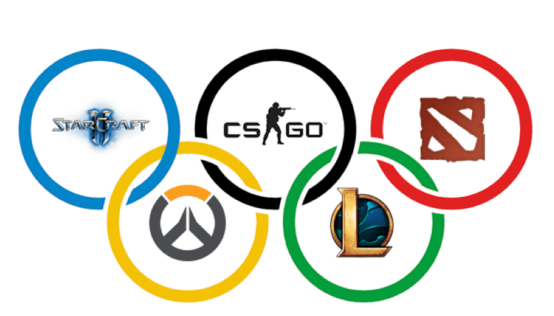
The roar of a stadium-sized crowd, the glint of a gold medal, the culmination of a lifetime of training—for decades, this has been the exclusive domain of traditional athletes. But a new contender has entered the arena, backed by hundreds of millions of fans and a multi-billion dollar industry. Esports, or competitive video gaming, is knocking on the Olympic door, presenting one of the most significant and controversial questions for the future of the Games. This guide explores the complex journey of esports toward Olympic inclusion, from its explosive growth to the major hurdles it must overcome.
The Meteoric Rise of Esports: From Niche to Global Phenomenon
To understand the Olympic debate, one must first grasp the sheer scale of modern esports. What began as small, local arcade competitions has evolved into a global spectacle, complete with professional leagues, salaried players, and prize pools that rival major sporting events.
A Brief History of Competitive Gaming
The roots of esports trace back to the 1970s and 80s with competitions in games like Space Invaders and Pac-Man. However, the true explosion occurred with the advent of the internet in the late 1990s, enabling players from around the world to compete in games like StarCraft and Quake. The 2010s marked the modern era, with streaming platforms like Twitch bringing esports to a massive global audience and games like League of Legends and Dota 2 establishing professional, franchised leagues.
Key Statistics: Audience and Revenue
The numbers behind esports are staggering. The global esports audience is projected to surpass 640 million viewers by 2025, with revenues exceeding $1.8 billion. Major events like the League of Legends World Championship regularly attract more viewers than the Super Bowl, demonstrating a level of engagement that is impossible for major sporting bodies to ignore.

The Olympic Committee’s Stance: A Cautious Embrace
The International Olympic Committee (IOC) is aware of esports’ massive appeal, particularly with younger demographics, a group with which the Olympics has struggled to connect. However, their approach has been one of cautious optimism, balancing potential rewards with the need to uphold Olympic values.
Early Explorations: The Olympic Virtual Series
The IOC’s first major foray into this world was the Olympic Virtual Series in 2021, a pilot event featuring virtual sports like baseball, cycling (via Zwift), and sailing. This was followed by the Olympic Esports Week in Singapore in 2023. These events carefully curated non-violent, sports-simulation titles, signaling the IOC’s preference and providing a testbed for how esports could integrate with the Olympic movement without compromising its core principles.
Aligning with Olympic Values
The IOC’s primary concern is ensuring any new discipline aligns with the Olympic Charter, which promotes “peace” and “human dignity.” This has created a significant barrier for many of the world’s most popular esports titles, such as Counter-Strike and Valorant, which are based on realistic combat and violence. The committee has repeatedly stated that it will not recognize games that are “contrary to Olympic values.”

The Case for Inclusion: Why Esports Belong in the Olympics
Proponents argue that including esports is not just beneficial but essential for the long-term relevance of the Olympic Games. The arguments extend beyond simple viewership numbers into the very definition of sport and athleticism.
Tapping into a Younger Demographic
The median age of an Olympic TV viewer is over 50 and rising. In contrast, the majority of the esports audience is between 18 and 34. For the IOC, esports represents a golden opportunity to engage a new generation of fans and ensure the Olympic brand remains vibrant and relevant for decades to come.
The Physical and Mental Demands of Pro Gaming
While critics question the physicality of esports, professional players exhibit extraordinary levels of skill, strategy, and mental fortitude. Pro gamers possess elite reaction times, make hundreds of actions per minute (APM), and endure intense mental pressure for hours. They follow strict training regimens, including physical fitness and nutrition, to maintain peak performance, mirroring the dedication of traditional athletes.

Major Hurdles and Controversies on the Road to Gold
Despite the strong case for inclusion, the path to Olympic gold for esports is fraught with significant and complex challenges that go to the heart of both the gaming industry and the Olympic movement.
The Governance Challenge: Publishers vs. Federations
Traditional sports are governed by non-profit international federations (like FIFA for soccer or World Athletics for track and field). In esports, the games themselves are intellectual property owned and controlled by for-profit publishers (like Riot Games for League of Legends or Valve for Dota 2). This creates a fundamental conflict. The IOC requires a single, stable governing body, but publishers have final say on rule changes, patches, and tournament licensing, a level of corporate control unseen in Olympic history.
The Volatility of the Esport Landscape
The sport of swimming has remained largely unchanged for a century. In contrast, an esport can rise and fall in popularity within a few years. A game that is a global phenomenon today could be irrelevant by the next Olympic cycle. This volatility makes it difficult for the IOC to make a long-term commitment to a specific title.

Potential Olympic Esports: A Contender Analysis
Not all esports are created equal in the eyes of the IOC. Games that mirror traditional sports, are non-violent, and have broad global appeal are the most likely candidates for initial inclusion. Below is a comparative analysis of potential titles.
| Game Title | Genre | Olympic Suitability Factors | Primary Challenge |
|---|---|---|---|
| Rocket League | Vehicular Soccer | Non-violent, easy to understand, high skill ceiling, team-based. | Publisher control (Epic Games). |
| Street Fighter 6 | Fighting Game | One-on-one competition, long history, represents martial arts. | Perception of one-on-one combat/violence. |
| EA Sports FC (formerly FIFA) | Sports Simulation | Directly mirrors an existing Olympic sport, globally recognized. | Licensing and publisher control (EA). |
| League of Legends | MOBA | Massive global audience, deep strategy, established pro scene. | Indirect violence and complex fantasy themes. |
| Zwift / Gran Turismo | Sports Simulation | Directly tied to physical activity, already used in Olympic virtual events. | Lower mainstream viewership compared to other esports. |

Expert Predictions: The Future of Esports at the Olympics
While full medal status for a major title like League of Legends remains a distant prospect, the integration of esports into the Olympic ecosystem is inevitable. Experts predict a gradual, phased approach.
Pro Tip: Expect a Phased Rollout
The most likely path forward is not a sudden inclusion of mainstream esports. Instead, expect the IOC to continue expanding its “Virtual Series” model. The first titles to be awarded anything resembling medals will almost certainly be sports simulations like virtual cycling, rowing, or racing. These serve as a low-risk bridge, familiarizing the Olympic audience and infrastructure with competitive gaming.
The Creation of an Esports Commission
The IOC has already established an Esports Commission to navigate the complex landscape. A key future step will be the formation of a recognized international federation for esports, independent of any single game publisher. This body would be responsible for standardizing rules, selecting games, and acting as the official liaison with the IOC—a crucial step to solving the governance problem. Full inclusion of any esport as a medal event is contingent on the success of such a federation.
Frequently Asked Questions (FAQ)
-
Are esports physically demanding?
- Yes, but in a different way than traditional sports. While they don’t require explosive power or endurance running, they demand incredible fine-motor skills, hand-eye coordination, and stamina to maintain focus and execute hundreds of precise actions per minute for extended periods. Many pro players also engage in physical fitness training to improve performance and prevent repetitive strain injuries.
-
Which games are most likely to be in the Olympics first?
- Sports simulation games are the clear front-runners. Titles that digitally replicate existing Olympic sports, such as cycling (Zwift), racing (Gran Turismo), or soccer (EA Sports FC), face the fewest barriers. They are non-violent, easy for a general audience to understand, and align perfectly with the Olympic brand.
-
Why are violent games a problem for the IOC?
- The Olympic Charter is founded on principles of peace, friendship, and non-discrimination. The IOC has stated that it cannot accept games that promote violence or killing, as this is fundamentally at odds with its core values. While many esports are fantasy-based, first-person shooters and other combat-centric games are currently considered a non-starter for official inclusion.
-
Who would govern esports if they were in the Olympics?
- This is the single biggest challenge. Currently, game publishers hold all the power. For Olympic inclusion, an independent, non-profit international federation would need to be established and recognized by the IOC. This federation would have to work with multiple, competing publishers to create a stable and fair competitive structure, a task that has so far proven incredibly difficult.