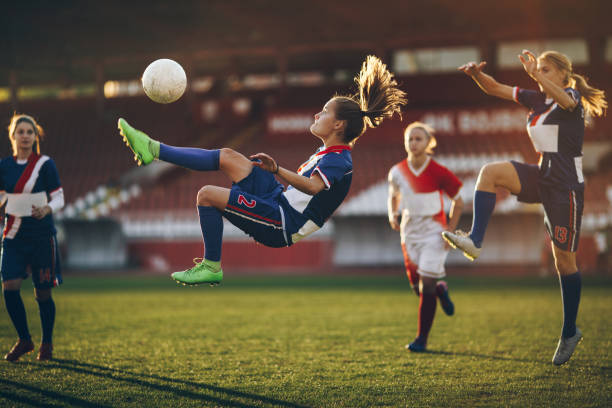
Overcoming Field Bias: How Women Can Choose Professional Gear and Confidently Dominate Team Sports
Have you ever stood on the sidelines of a basketball court, soccer field, or volleyball court and felt a little hesitant? Perhaps you were worried about not finding suitable sports equipment, or you were afraid of getting injured in the intense competition, or perhaps you simply felt that the environment was not naturally meant for you.
This feeling is not your imagination. For a long time, sports science, equipment design, and even cultural narratives have more or less used male athletes as the default template, which means that women often face the dual challenges of “unfitting equipment” and “unfriendly environment” when participating in high-intensity ball sports.
But now, it’s time to break down this “glass ceiling” on the sports field. From college sports to the Olympic Games, women are proving with their strength and passion that ball sports belong to everyone. This article will break down the two core elements of women’s participation in ball sports: the selection of professional equipment and effective participation strategies, helping you equip yourself and confidently engage in the sport.
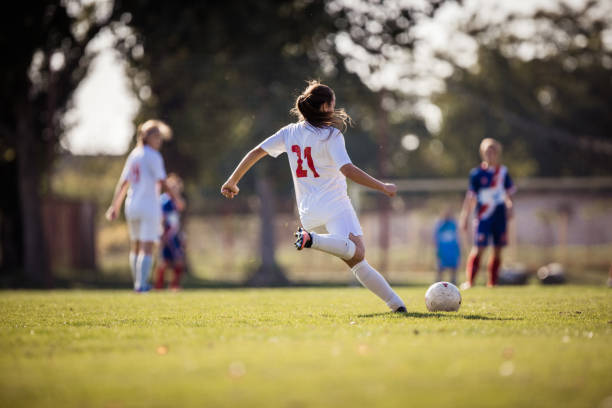
Gear Up to the Teeth: A Professional Equipment Guide for Women’s Ball Sports
In sports like football, basketball, or volleyball, which emphasize speed, explosiveness, and physical contact, equipment is no longer just for decoration, but crucial for protecting the body and optimizing performance. Given women’s unique physiological structure and athletic needs, the following three areas require specialized consideration.
1. High-Impact Bra: Uncompromising Core Support
Sports involving a lot of jumping, sudden stops, and changes of direction require the highest level of chest support. Choosing the wrong bra can not only cause discomfort but may also lead to tissue damage.
Selection criteria: You must clearly choose a professional model labeled “High-Impact” or “Maximum Support”.
Structure over compression: Avoid vest-style designs that simply “compress” the breasts. Prioritize designs with **encapsulation**, which provide better separation and shaping support while reducing friction.
Purchase test: Do a “jump test” in the fitting room—jump 10 times in place. If the shoulder straps slip, the underbust feels tight, or there is noticeable bouncing in the chest area, exchange it immediately. It must make your body movements feel smooth and stable.
2. Bottom Equipment: A Perfect Balance of Functionality, Safety, and Comfort (Bottoms: Built for Movement)
Functional bottom gear can directly affect your running efficiency and sense of security during exercise.
The Value of Compression Gear: Don’t assume compression gear is only for professional athletes. High-quality compression gear provides continuous support and support for your leg muscles (such as the quadriceps and hamstrings), reducing muscle vibration during strenuous exercise, thus delaying fatigue and speeding up recovery. High-waisted styles are recommended, as they offer additional core stability and a sense of security.
Choosing athletic shorts: The ideal choice is **two-in-one** shorts: the outer layer is loose to allow for freedom of movement, while the inner lining is close-fitting to prevent chafing on the inner thighs due to repeated friction (especially in humid and hot environments).
3. Footwear and Protection: Your body needs tailor-made traction (The Right Traction and Fit)
Although many sneakers are designed for unisex use, women need to consider their own characteristics more carefully when choosing them:
Ankle protection: Given that women may be more prone to ankle sprains than men in certain sports, if you have relatively weak ankle strength, you may consider choosing high-top or mid-top basketball or volleyball shoes to increase lateral support.
Shoe last width: Many women have a relatively wider forefoot, and a standard unisex shoe last may be too narrow. Make sure the shoes you choose allow enough room for the forefoot to avoid compression that can lead to blisters, black toenails, or bunions.
Effective Participation Strategies: Overcome Psychological Barriers and Confidently Integrate into the Court
With the right equipment, the next step is to combine mental preparation with scientific methods to confidently and efficiently integrate into the sports community.
1. Define your “Why” for exercise.
What was your initial motivation for participating in this sport? Was it to relieve work stress, expand your social circle, or achieve a certain physical fitness goal?
Shift from a goal-oriented to a growth mindset: Especially for beginners, shift your focus from **”I won/lost” or “How much worse am I than others”** to “What did I learn this time?” and “How do I feel physically?” This growth mindset will help you maintain your enthusiasm and persevere through setbacks.
2. Build Your Safe Space Network
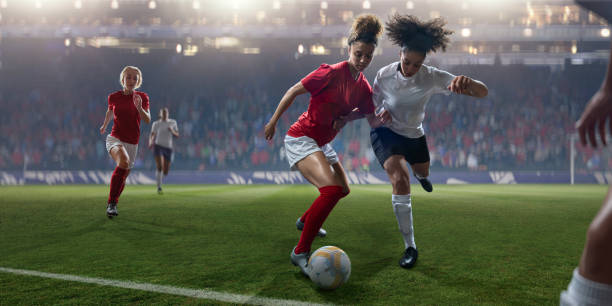
For beginners, an inclusive environment is more important than competitive pressure.
Start in a low-pressure environment: If joining a highly competitive mixed-gender game makes you nervous, try finding or creating an all-female training group, ball game class, or low-intensity recreational league first. In the comfort of an environment where you’re not being scrutinized or judged, you’re more free to experiment, make mistakes, and master the basics.
Utilizing female mentors: Many studies have shown that female coaches or mentors have a deeper understanding of the physiological and psychological needs of female athletes, and can provide more targeted feedback and support.
3. Smart Planning and Recovery
Female athletes require more meticulous management of their training and recovery, especially considering the impact of menstrual cycles on physical fitness and injury risk.
Focus on ACL injury prevention: Women are statistically at higher risk of ACL injuries during sports than men. Therefore, you must focus on strengthening your glutes and core muscles to stabilize your knee joint. Think of strength training as “insurance” for your performance on the court.
Listen to your body and adjust accordingly: Don’t be shy about adjusting your training intensity based on your menstrual cycle. On days when you feel fatigued or unwell, talk to your teammates or coach and choose to do lighter technical training or recovery activities.
in conclusion:
When you successfully break through an opponent’s defense on the court, make a precise pass, or help your teammates win a game, what you gain goes far beyond burning calories. You are developing teamwork skills, decision-making ability under pressure, and problem-solving adaptability .
The confidence and resilience honed through exercise will, like compound interest, extend to every corner of your life—the workplace, social life, and even personal growth.
Starting today, stop letting unsuitable equipment or outdated ideas hold you back. Invest in your body, find your community, and bravely make your voice heard on the court.
What ball sport would you most like to try but have hesitated to do so due to equipment or environmental factors? Leave a comment and tell us, and maybe you can find a sports partner here!