The Ultimate Guide to Modern Boxing Legends: Paths to Greatness
The Evolution of Boxing Greatness: Defining the Modern Era
The landscape of professional boxing has undergone a radical transformation over the past few decades. Moving away from the raw, unrefined brawls of the early 20th century, the modern era of the “Sweet Science” is defined by an unprecedented fusion of elite athleticism, sports science, and deeply ingrained tactical frameworks. The champions of today are not merely fighters; they are highly specialized biomechanical machines capable of processing complex spatial data in fractions of a second. This pillar guide deconstructs the multifaceted journeys of the greatest pugilists of our time, analyzing the precise mechanisms that elevate a good fighter to a legendary, undisputed world champion.
To truly understand boxing greatness, one must look beyond the spectacular knockouts and undefeated records. The essence of a champion lies in their adaptive intelligence—the ability to decipher an opponent’s rhythm, neutralize their primary weapons, and impose a dominant strategic will. Whether it is the defensive wizardry born in the gyms of Grand Rapids, the relentless pressure forged in the streets of Karaganda, or the explosive angles developed in the amateur rings of Ukraine, every legend brings a unique paradigm to the squared circle.
The Core Pillars of Championship Pedigree
Achieving legendary status in boxing requires the harmonious integration of multiple physical and psychological attributes. While a single elite trait may win a world title, it takes a complete, unbreakable foundation to unify divisions and secure a legacy. The modern boxing greats share several non-negotiable characteristics that set them apart from the rest of the contender pool.
- Ring Generalship: The authoritative control of the ring’s geography. Fighters like Canelo Alvarez and Gennady Golovkin excel at taking away their opponent’s escape routes, subtly forcing them into corners and along the ropes where defensive options are severely limited.
- Distance Management: The microscopic understanding of range. A master like Dmitriy Bivol uses his lead foot and probing jab to maintain a spatial cushion that allows him to strike without being countered, effectively dictating the terms of engagement.
- Neurological Endurance: The capacity to maintain high-level cognitive function under extreme physical distress. In the championship rounds (9 through 12), legends like Oleksandr Usyk increase their output, their minds operating with absolute clarity despite the accumulation of fatigue and physical damage.
These pillars are not innate; they are meticulously constructed through tens of thousands of hours of repetitive drilling, sparring, and mental conditioning. The transition from a talented prospect to a pound-for-pound king is a grueling crucible that burns away technical flaws and exposes the true character of the athlete.

Technical Masters and Defensive Geniuses in the Ring
If boxing is a physical game of chess, the technical masters are the grandmasters who see the board ten moves ahead. These fighters rely on supreme defensive structures, anticipation, and counter-punching to dismantle their opposition. They turn their opponents’ aggression into a fatal vulnerability, proving that the art of hitting and not getting hit is the ultimate expression of boxing mastery.
Floyd Mayweather: The Architect of 50-0
Floyd “Money” Mayweather’s flawless 50-0 record is a testament to the most sophisticated defensive system in modern boxing history. Transitioning from “Pretty Boy Floyd”—a lightning-fast, offensive-minded super featherweight—to the defensive savant of his later career, Mayweather perfected the Philly Shell defense. By tucking his chin behind his lead shoulder, keeping his right hand glued to his cheek, and using his torso to deflect incoming fire, Mayweather made himself virtually unhittable. His signature “pull counter”—leaning back just enough to make an opponent’s jab miss by millimeters before snapping back with a devastating straight right—demoralized generations of elite challengers.
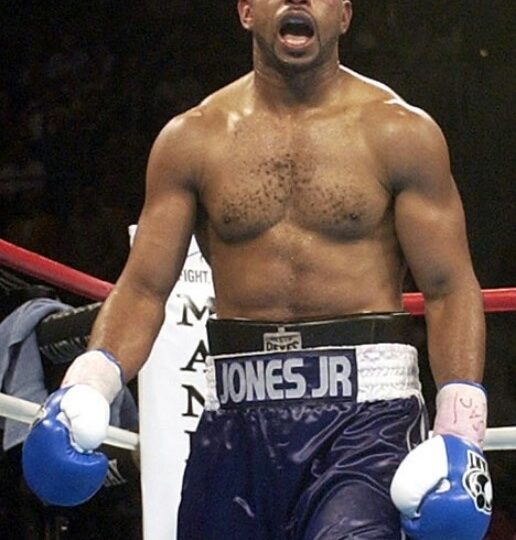
Roy Jones Jr.: The Athletic Anomaly
In stark contrast to Mayweather’s calculated shell, Roy Jones Jr. relied on otherworldly reflexes and unorthodox angles that defied traditional boxing fundamentals. During his prime in the 1990s and early 2000s, Jones routinely fought with his hands down, baiting opponents into throwing punches he would easily slip. He was famous for leading with the left hook—a cardinal sin in textbook boxing—and landing it with blinding speed and knockout power. Jones’s ability to seamlessly shift from middleweight all the way to heavyweight to capture the WBA title remains one of the most astonishing athletic feats in combat sports history.
Dmitriy Bivol: The Soviet-Style Metronome
Dmitriy Bivol represents the absolute pinnacle of the Eastern European amateur system translated into professional dominance. Born in Kyrgyzstan and honed in Russia, Bivol’s style is characterized by the “pendulum step”—a rhythmic, bouncing footwork that allows him to enter and exit range with mechanical precision. Unlike flashy defensive fighters, Bivol’s defense is entirely predicated on distance and a high, impenetrable guard. His systematic dismantling of Canelo Alvarez showcased his ability to use a piston-like jab and brilliant lateral movement to completely neutralize a heavier, devastating power puncher.

The Devastating Power Punchers and Knockout Artists
While defensive mastery wins scorecards, devastating power captivates the masses. However, the legends of the knockout are not mere brawlers swinging wildly; they are precision engineers of trauma. They understand the biomechanics of kinetic chaining, transferring energy from the floor, through their hips, and into their knuckles with maximum efficiency. Their pressure is psychological as much as it is physical.
Artur Beterbiev: The Iron Fist of the Light Heavyweights
Artur Beterbiev is a terrifying force of nature, boasting an unprecedented knockout ratio in the modern championship era. Beterbiev’s power is not just explosive; it is heavy and concussive, capable of breaking down opponents through their guard. What makes Beterbiev truly exceptional is his inside fighting. He possesses the rare ability to generate fight-ending leverage in extremely tight quarters, utilizing short hooks and uppercuts. His bone density and raw physical strength make clinching him a punishing endeavor, slowly sapping the will of anyone sharing the ring with him.
Naoya Inoue: The Anatomy of a “Monster”
Naoya Inoue has completely redefined the lower weight classes. Earning the moniker “The Monster,” Inoue combines blistering speed with flawless technique and terrifying power. His mastery of the left hook to the liver is legendary; he understands the precise anatomical angle required to shut down an opponent’s nervous system. Inoue’s rise through multiple weight classes to become an undisputed champion is built on his impeccable timing. He does not just throw hard; he lands his shots exactly when his opponents are stepping in, effectively doubling the impact force through collision physics.
Gennady Golovkin (GGG): The Mexican Style from Kazakhstan
Gennady Golovkin’s journey from the tough streets of Karaganda to Madison Square Garden is a story of relentless, stalking pressure. Trained by Abel Sanchez, GGG adopted a “Mexican Style” that blended his deep Soviet amateur pedigree with vicious body punching and forward momentum. Golovkin’s jab is arguably one of the heaviest in middleweight history, functioning not just as a range-finder, but as a battering ram that disrupts combinations and causes physical damage. His ability to cut off the ring—taking lateral steps to block escapes rather than following his opponent in a circle—is a masterclass in ring geography.

Giants of the Ring: The Heavyweight Kings
The heavyweight division has always been the crown jewel of boxing, where a single punch can alter the course of history. The modern heavyweight landscape is characterized by super-heavyweights—men standing over 6’6″ and weighing upwards of 250 pounds—who possess the movement and agility of much smaller men. The clash of styles at the very top of this division has produced some of the most compelling narratives in sports.
Tyson Fury: The Gypsy King’s Resurrection
Tyson Fury’s life is a legendary tale of triumph over profound mental health struggles and physical deterioration. Standing 6’9″, Fury is a paradoxical fighter: a giant who moves with the fluidity of a middleweight. Under the tutelage of the Kronk Gym lineage, Fury evolved from a pure slick boxer into an aggressive, leaning behemoth who uses his massive weight to exhaust opponents in the clinch. His feints, upper-body movement, and switch-hitting capabilities make him an unsolvable puzzle. His trilogy with Deontay Wilder showcased not only his tactical brilliance but an almost mythical recuperative ability, rising from devastating knockdowns to dominate the later rounds.
Oleksandr Usyk: The Southpaw Matrix
Oleksandr Usyk, the South Ukrainian sailor turned undisputed cruiserweight and heavyweight champion, relies on supreme cardiovascular conditioning and complex angles. Usyk brings the “Lomachenko Matrix” style to the heavyweight division. He uses constant lateral movement, pivoting on his lead foot to create blind spots for his opponents. By throwing high volumes of lighter, blinding punches, Usyk overloads his opponent’s sensory processing, before stepping off the centerline and landing sharp, scoring blows. His victories over significantly larger men prove that superior footwork, stamina, and ring IQ can overcome massive disadvantages in size and raw power.

Forged in Fire: From Street Kids to Pound-for-Pound Kings
The crucible of poverty has forged some of the most resilient minds in boxing history. For these fighters, boxing was not a sport; it was a desperate bid for survival. This unparalleled hunger translates into an indomitable will inside the ring, pushing them to conquer multiple weight divisions and cement their legacies as pound-for-pound greats.
Manny Pacquiao: The Eight-Division Miracle
Manny Pacquiao’s ascent from a starving street kid in the Philippines to the only eight-division world champion in boxing history is an unparalleled modern epic. Pacquiao’s style was defined by his extraordinary calves and explosive plyometric power. He utilized an in-and-out darting movement, attacking from southpaw angles that orthodox fighters simply could not anticipate. His combination of blinding hand speed, relentless volume, and the ability to throw powerful combinations while off-balance made him a nightmare for traditional, flat-footed boxers. Pacquiao’s willingness to fight the absolute best, regardless of weight disadvantages, cemented his status as a global icon.
Terence Crawford: The Switch-Hitting Executioner
Terence “Bud” Crawford represents the epitome of a complete fighter. Known for his mean streak and unmatched finishing instincts, Crawford’s most dangerous weapon is his ambidexterity. He can fight flawlessly from both orthodox and southpaw stances, often switching mid-combination to exploit defensive gaps. Crawford is a notorious slow starter; he uses the first few rounds to download his opponent’s timing and tendencies. Once he computes the data, he transitions into an aggressive counter-puncher, setting traps and delivering devastating, pinpoint strikes that inevitably lead to spectacular stoppages.
Canelo Alvarez: The Mexican Superstar’s Evolution
Saul “Canelo” Alvarez’s journey from a freckled Mexican teenager to a four-division world champion is a story of continuous, obsessive improvement. Early in his career, Canelo was a stationary counter-puncher. Over time, he developed elite upper-body movement, slipping punches by fractions of an inch to deliver brutal left hooks to the liver. Canelo’s high guard is nearly impenetrable, and his ability to walk down opponents while remaining defensively responsible is a masterclass in modern pressure fighting. His strategic dismantling of the super middleweight division showcased his evolved ring generalship and devastating punch placement.

Advanced Strategies: The Anatomy of an Undisputed Champion
At the elite championship level, the physical differences between fighters are often marginal. The factors that determine who leaves with the undisputed crown are deeply rooted in advanced preparation, sports science, and psychological warfare. A modern boxing camp is a highly sophisticated operation involving nutritionists, strength and conditioning specialists, data analysts, and sports psychologists.
The integration of technology has revolutionized how fighters prepare. Wearable sensors track punch velocity and cardiovascular output, ensuring athletes peak at exactly the right moment during fight week. Weight cutting, once a brutal and dangerous guessing game, is now managed through precise manipulation of water loading and macronutrient timing, allowing fighters to rehydrate effectively and step into the ring significantly heavier and stronger than their weigh-in weight.
| Fighting Style | Core Mechanism | Legendary Examples | Key Advantages |
|---|---|---|---|
| Out-Boxer | Maintains distance, uses jab and footwork to score points while avoiding engagement. | Dmitriy Bivol, Oleksandr Usyk | Minimizes damage, controls pace, frustrates aggressive opponents. |
| Boxer-Puncher | Combines technical boxing skills with one-punch knockout power. | Canelo Alvarez, Terence Crawford | Highly adaptable, can win on points or end the fight instantly. |
| Swarmer/Pressure | Relentless forward motion, inside fighting, high volume output. | Manny Pacquiao, Gennady Golovkin | Overwhelms defense, causes extreme cardiovascular fatigue in opponents. |
| Counter-Puncher | Relies on head movement and traps to exploit opponent’s offensive mistakes. | Floyd Mayweather, Roy Jones Jr. | Uses opponent’s momentum against them, highly efficient energy use. |
Furthermore, the mental conditioning of a champion cannot be overstated. The ability to remain completely detached and analytical while under physical assault is what separates the good from the great. Fighters use visualization techniques to mentally simulate every possible scenario inside the ring, ensuring that when they face adversity, their response is automatic and devoid of panic. This psychological armor is the final, most crucial layer in the anatomy of an undisputed champion.
Frequently Asked Questions (FAQ)
- What does “Pound-for-Pound” mean in boxing?
- The term “Pound-for-Pound” (P4P) is a theoretical ranking system used to determine who the best fighters are, regardless of their weight class. It asks the question: If all boxers were the exact same size and weight, who would be the most skilled and dominant? It factors in technical ability, resume, undisputed titles, and overall dominance in the ring.
- How did Floyd Mayweather’s Philly Shell defense work so effectively?
- The Philly Shell relies on asymmetrical body positioning. By blading his stance, tucking his chin behind his lead shoulder, and dropping his lead arm across his torso, Mayweather protected his head and body simultaneously. This stance forces opponents to throw looping punches, which are slower and easier to see, allowing Mayweather to roll with the impact or counter with his right hand.
- Why is Naoya Inoue called “The Monster”?
- Naoya Inoue earned the nickname “The Monster” due to his terrifying, one-punch knockout power in the lighter weight classes (such as Bantamweight and Super Bantamweight), which is historically rare. His flawless technique, brutal body attacks, and ability to completely separate opponents from their consciousness have made him one of the most feared punchers in modern boxing.
- What is the difference between an Undisputed Champion and a Unified Champion?
- A Unified Champion is a boxer who holds two or more of the major sanctioning body world titles (WBA, WBC, IBF, WBO) in a single weight division. An Undisputed Champion is a fighter who holds all four major belts simultaneously, leaving absolutely no doubt as to who is the supreme ruler of that specific weight class.
- How do fighters like Usyk overcome massive size disadvantages at Heavyweight?
- Fighters like Oleksandr Usyk utilize superior ring IQ, elite cardiovascular conditioning, and complex footwork to overcome size. Instead of engaging in a test of strength, Usyk uses lateral movement and southpaw angles to stay off the centerline, making the larger man constantly reset his feet. By throwing high volumes of punches and utilizing feints, he exhausts the heavier fighter both physically and mentally.