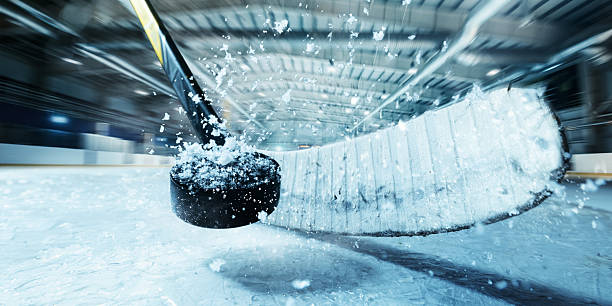
Stop watching ice hockey: Indoor hockey—a geometric blitzkrieg that will get your adrenaline pumping.
When you think of hockey, two images might come to mind: either the violent, fast-paced collisions on an ice hockey rink or the intense running on a wide grass field. But now, it’s time to get to know a third form: indoor field hockey.
This sport shrinks the playing area to the size of a standard basketball court and halves the number of players. It’s not just about playing in a different place; it completely changes the DNA of the game. Due to special rule restrictions—especially the prohibition of wide-ranging shots—indoor hockey demands that players elevate their wrist skills, precise passing, and tactical intelligence to the extreme.
If you consider yourself a fan of futsal or 3×3 basketball, then you’ll love this “blitzkrieg” sport that demands incredible agility, reaction speed, and geometric thinking. This article will reveal the unique appeal of indoor hockey and why it’s an excellent platform for honing your skills.
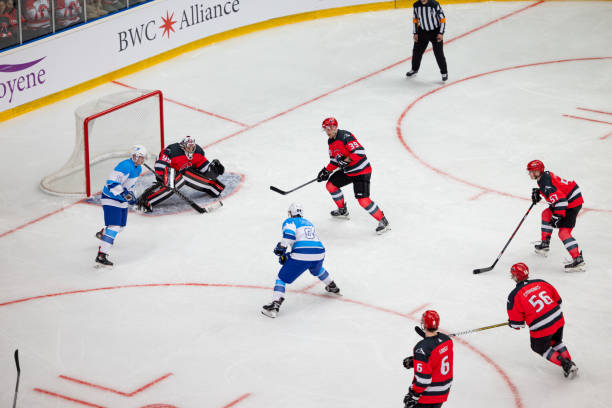
I. Rule Revolution: How can a small venue foster a high-intensity rhythm?
The appeal of indoor hockey lies entirely in its revolutionary simplification of the rules of traditional outdoor hockey.
Field constraints: the power of barriers and five-a-side football
high density: Imagine the tactics required to execute on a standard outdoor hockey field (11-a-side) now having to be performed by 5 players (4 players + 1 goalie) in a space only the size of a basketball court. This drastically reduces decision-making time, demanding instantaneous reactions. The tactical value of self-cleaning litter box boards: The most striking feature of indoor fields is the surrounding hard barriers. These are not obstacles, but tactical resources! Players can legally hit the ball against the boards, using the angled bounce to pass, get past defenders, or create shooting opportunities. This completely eliminates out-of-bounds play, ensuring possession and uninterrupted flow of the game.
Core limitation: Technology trumps brute force
“No Hitting”: The most decisive rule in indoor hockey is the prohibition of large swings. You can’t hit the ball with the same force as on grass; you can only use short, precise movements like pushing, scooping, or flicking. The self-cleaning litter box also has an impact: this rule completely eliminates long passes and “powerful” plays that rely on stamina and strength. The outcome of the game depends entirely on wrist dexterity, puck control consistency, and passing accuracy.
The technical challenge: the essential skill tree for indoor hockey
In indoor hockey, there’s no time to breathe or think. You need to make the best decisions in a very short time, so it demands extremely high individual skills.
Adhesive Disc Art
The wrist is the engine: excellent indoor hockey players are wrist masters. They must utilize the rapid, precise rotation of both sides of the bat and their wrists to make the ball seem “attached” to the bat, completing changes of direction and control at high speeds. The self-cleaning litter box ground pass is a hard and fast rule: the ball must stay close to the ground, and high passes are strictly limited. This means the pass must precisely navigate through a “forest” of defensive players, demanding extremely high spatial awareness from the player.
Geometry Master: The Baffle is Your Sixth Teammate
Think like you’re playing billiards: Skilled indoor hockey players, like billiard masters, mentally rehearse the angle and speed of the ball’s bounce after hitting the paddle. They use the paddle for quick one-two plays, creating unexpected open spaces for themselves or their teammates. The self-cleaning litter box analogy: This is similar to the “bank pass” in basketball or using the fence in ice hockey, but it must be executed instantaneously in a very small space, making it even more difficult.
Defensive pressure: You must be an all-around player
Nowhere to hide: The small field means the defensive pressure increases instantly. Once you make a mistake in your own half, the opponent can almost immediately get a shooting opportunity. Self-cleaning litter boxes and one-on-one defense are paramount: Every player on the field must have strong one-on-one defensive ability and a quick recovery awareness, because the support distance from teammates is very limited.
Beyond the Field: The Value and Future of Indoor Hockey
The appeal of indoor hockey lies not only in its entertainment value but also in its ability to cultivate athletes’ all-round abilities.
The gold standard of winter training
Many of the world’s top outdoor hockey players make indoor games the core of their winter training. Why?
Improving decision-making speed: The high pace of indoor competition hones athletes’ hand-eye coordination, agility, and ability to make rapid decisions under pressure. Self-cleaning litter box technique refinement: The rule prohibiting hitting the ball forces athletes to continuously improve their delicate dribbling and passing skills.
Popularity and safety considerations
Low barrier to entry: Indoor hockey doesn’t require large grass fields; any stadium or gym can serve as a venue, greatly increasing its popularity in cities. Risk of injury from self-cleaning litter boxes: Due to the flat surface and rules limiting high swing amplitude, indoor hockey carries a lower risk of severe impacts and swing injuries compared to traditional outdoor hockey, attracting more teenagers and women to participate.
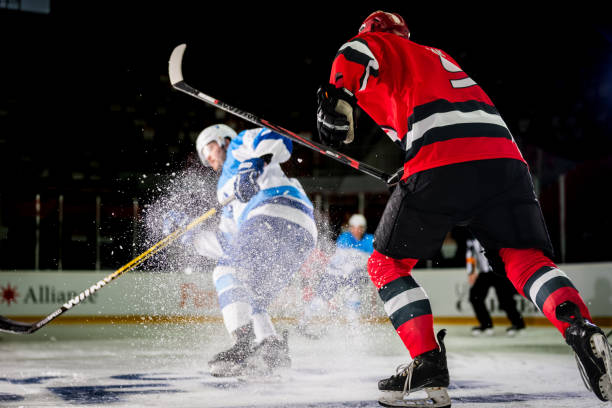
In conclusion:
Indoor hockey proves that in the world of sports, skill, speed, and geometric ingenuity can completely transcend mere physical ability and strength. It’s a simultaneous explosion of mind and muscle, requiring you to think like a calm tactician but act like an agile sprinter.
If you’re tired of long, running-heavy traditional ball sports, and if you’re looking for a sport that truly challenges your hand-eye coordination and quick reflexes, then indoor hockey is definitely the sport you should try next.
Do you think the “baffle pass” in indoor hockey is one of the smartest tactics in sports? Share your thoughts on this sport in the comments!