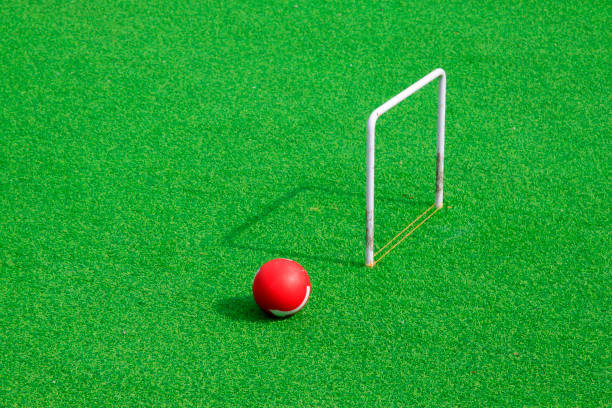
Gateball: The Underrated Grassland Chess—Why This Asian Sport Deserves Your Attention
When you hear “ball sports,” you might picture dunks on a basketball court, sprints on a soccer field, or high-intensity rallies on a tennis court. But have you ever heard of a sport that originated in Asia, has millions of participants worldwide, and is hailed as “chess on grass”? That sport is gateball.
It is often compared to croquet, but croquet is faster, more strategic, and has simpler, easier-to-learn rules. Originating in Japan in 1947, it quickly gained popularity in Asia (especially in China and South Korea) and parts of South America, becoming a perfect intergenerational social activity.
If you’re looking for a low-impact, high-strategy, and socially engaging outdoor sport, gateball might be the hidden gem you’ve been searching for. Let’s uncover the rules and allure of this sport.
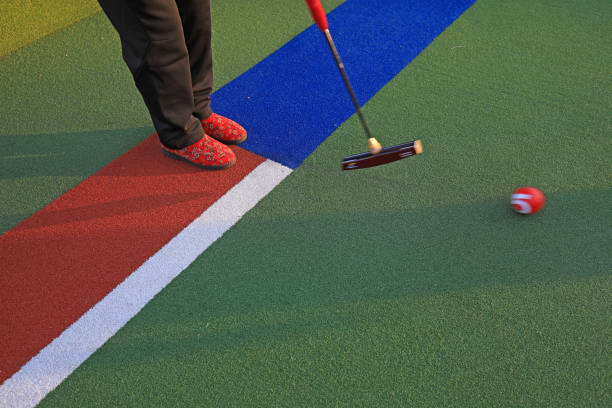
Gateball Basics: A 30-Minute Strategic Game
The core gameplay of gateball is simple: use a mallet to hit a ball through three goalposts on the ground and eventually hit the finish line. But it’s far more complex than it seems.
Site and target setting
Gateball is played on a flat grass or hard surface, with a court size similar to a volleyball court (approximately 20×15 meters). Key elements include:
Three Gates: U-shaped iron gates that need to be passed through in sequence (Gates 1, 2, and 3).
The finish line post (pole): The post located in the center of the field, which is the final target of the race.
Equipment: Team members use a long-handled mallet to hit their numbered balls (numbers 1 to 10).
2. Team competition and scoring mechanism
The game is played between two teams (usually 5 players each), and each game lasts 30 minutes.
Taking turns hitting the ball: Players take turns hitting the ball according to the numbering order of the balls.
Score Calculation:
One point is awarded for successfully getting the ball through each goal.
Successfully hitting the finish line post earns 2 points.
Winning condition: The team with the highest cumulative score at the end of 30 minutes wins.
Why is gateball described as “chess on grass”?
The allure of gateball lies not in physical strength, but in mental intelligence. It demands that participants possess both superb striking skills and profound tactical foresight.
1. H3.1 “Tapping”: The killer move in gateball
This is the most strategic rule in gateball and also the biggest difference between it and traditional croquet:
When your shot successfully hits (or “touches”) a teammate’s or opponent’s ball, you not only get an extra shot, but you can also choose to place your ball next to the hit ball and then gently tap your ball with your mallet to “bounce” the opponent’s ball to your desired location.
This means you can:
Strategic scoring: Bounce the ball to a teammate’s goal to create a scoring opportunity.
Disruptive defense: Bounce the opponent’s ball into a corner of the field, away from the goal, wasting valuable time.
2. Teamwork and Tactical Planning
In gateball, you’re not alone. You have to think: should I shoot and score, or sacrifice my position to deflect a crucial ball (like the number 10) to the edge of the field?
This strategy, which relies heavily on team communication, anticipating the opponent’s movements, and sacrificing personal interests for the greater good, makes the tactical depth of gateball far beyond what most people imagine.
Gateball: A slow sport suited to the modern lifestyle
Gateball has attracted millions of followers worldwide, especially in older communities, because it perfectly aligns with contemporary needs for health and social interaction.
| The unique value of gateball | Why is it right for you? |
| Health benefits | Gateball is a low-impact sport. It doesn’t require running, doesn’t hurt your knees, but it can improve your balance, core strength (which requires body stability when hitting the ball), eye-tracking ability, and hand-eye coordination. |
| Intergenerational social interaction | Because of its low physical demands, gateball is one of the few sports that allows three generations of a family to compete together. It greatly promotes interaction within the community and understanding between generations. |
| Psychological benefits | Making strategic decisions under 30-minute time pressure effectively trains your focus, stress management, and rapid planning abilities. The satisfaction it brings is comparable to playing a successful game of chess. |
In conclusion:
In the early stages of its promotion in Asia, gateball did indeed successfully fill the needs of the elderly for social interaction and low-intensity exercise, but we should not let the stereotype of it being “only for the elderly” obscure its true value.
Gateball is a perfect “beginner-friendly strategy sport.” It combines the elegance of croquet, the geometry of billiards, and the tactical depth of chess. If you’re tired of the gym and don’t want to take the risks of high-intensity exercise, gateball offers a brand-new option that keeps your body active while challenging your mind.
Would you try to find a gateball group in your local park or community and experience the charm of this “lawn chess” firsthand? Tell us your thoughts on the sport in the comments!